Case Study · 3D Systems · 2016–2019
The analytics suite that ran procurement by the numbers
The problem
A procurement organization managing thousands of open purchase-order lines had no shared, recurring view of how it was actually performing: were suppliers delivering on time, was quality holding, how long were we taking to pay, and was basic PO hygiene — confirmations, past-dues — under control? Answers existed only as one-off queries.
What I built
A suite of recurring analytic reports, each built end to end — I designed the metrics, built the data pulls against our Oracle reporting layer, and constructed the reporting logic. The suite covered four fronts:
- Supplier on-time delivery — monthly on-time / early / late receipt performance by purchasing category and supplier, against an explicit goal line. This report was a requirement for the factory's ISO 9001 certification, which it achieved.
- Supplier quality — rejected-parts-per-million tracking by value received, tied to supplier corrective-action requests.
- Payables timing (WADPO) — Weighted Average Days Payment Outstanding, a payment-amount-weighted measure of invoice-to-payment timing by location, region, and supplier. Like WALT, a metric I devised: dollar-weighting turns an average into a priority.
- Purchase-order discipline — a daily tracker of unconfirmed and past-due PO lines against working limits, across ~2,200 open lines.
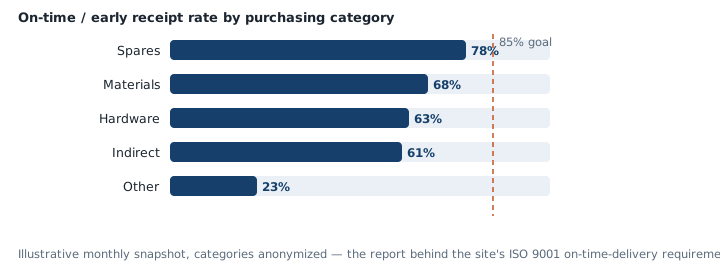
Illustrative monthly snapshot, categories anonymized — the on-time-delivery report behind the site's ISO 9001 requirement.
What it changed
Measured daily against visible limits, PO discipline stopped being an abstraction. Past-due lines that had been drifting into the triple digits were driven down and held down — same team, same workload, different visibility.
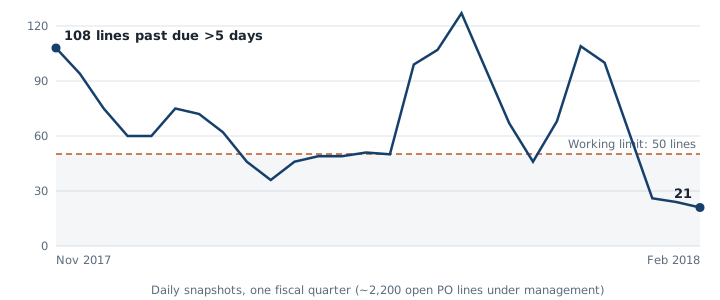
Reconstructed illustration of the report's trajectory over one fiscal quarter. Line counts shown; dollar figures omitted.
Why it mattered
The suite ran on deep MRP fluency — I also held the weekly recalibration of MRP itself against prior-week actuals and forecast changes — and it turned procurement from a function that answered questions into one that asked them first. Years later, this is the same muscle behind the cost-model and analytics work I do now: define the metric, own the pipeline, make the number impossible to argue with.